
OUR RECOGNITION PHILOSOPHY
28 principles for recognizing positive impact
Every improvement can start a story. Open a principle to see what it means in practice and discover its illustrated example.
These principles guide EkoPulse’s development. Each shows what applies today, what is partly applied and what remains to be developed. Examples and illustrations express the philosophy; “Today in EkoPulse” explains how it currently works.
AI helps interpret the described improvements and their reach relative to each profile’s size and activity. The engine applies shared rules to convert those assessments into Impact, group the same work and add relevant relationships within limits. Reliability expresses the support for the information. Points do not represent tonnes avoided or a net impact balance.
Consult the current methodologyPositive contributions
01Recognize positive contributionsWe recognize positive contributions without imposing penalty points.Applied today
Eligible improvements and relevant relationships receive recognition. The score does not calculate harm or the net balance of all activity.
A person starts composting and receives recognition for that step. They do not need to prove that their entire life is sustainable.

02We can all contributeTaking part does not require a perfect sustainability record.Applied today
A profile with eligible improvements can receive a score even if its activity has other effects. The score does not certify that the whole profile is sustainable.
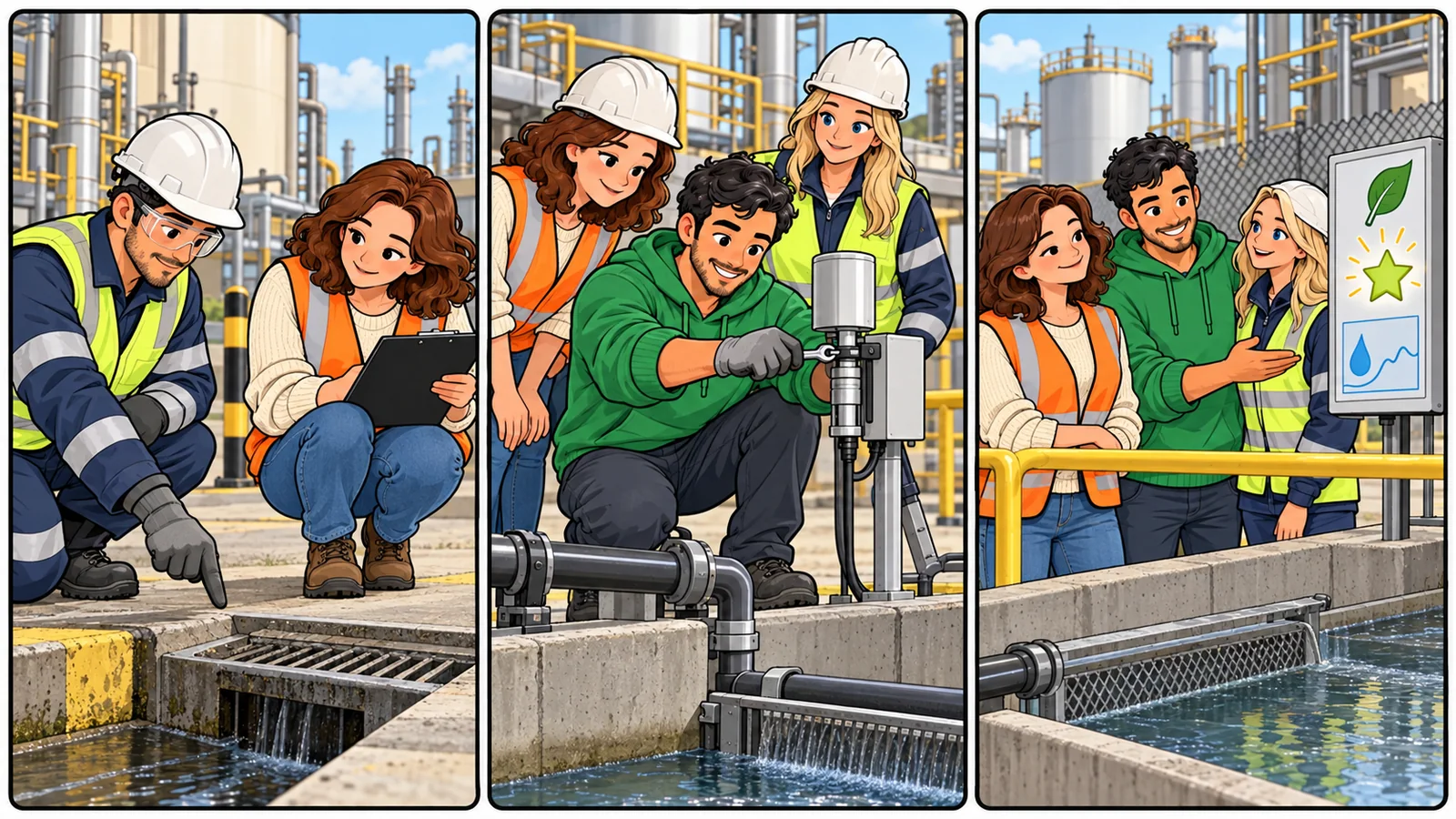
A petrochemical company can receive recognition for a specific improvement. This does not make its score an assessment of all its effects.
03Assess reach with AI assistanceAI helps interpret how significant each contribution is for the profile; counting actions is not enough.Applied today
An AI reader assigns reach levels from L0 (symbolic) to L5 (transformative), following shared rules. The scoring engine converts those assessments into points. L4 and L5 count as L1 until human confirmation; new improvements or those whose text has changed also count as L1 until reassessed.
Changing one bulb and replacing all the heating in a school are two actions, but their reach differs. The assessment should consider what changes and whom it reaches, using the available information.

04Living with less also countsOwning and consuming less can deserve more recognition than buying efficient alternatives.Partly applied
Reducing consumption can be described as an improvement and assessed by its reach. There is no automatic comparison of lifestyles, purchases or mobility alternatives.
A person who walks and uses public transport may receive more recognition for their mobility than someone who buys an electric car, taking context and the life cycle into account.

05Improving and performing well both countWe aim to recognise both improvement and good current performance.Future development
There are no separate scoring components for improvement and current performance. Measurements and their averages are not yet included in the algorithm.
A shop can stand out by consuming less than comparable shops and also by reducing its own consumption while maintaining its activity.

06Recognize ongoing careMaintaining ecosystems and good practices deserves lasting recognition.Partly applied
A conservation activity can be assessed by its reach. No automatic additional points are awarded for each year of maintenance or continuity.
Preserving an existing forest also adds value. There is no need to damage it first to receive recognition for restoring it later.

07Recognize worthwhile attemptsA significant effort may deserve recognition even if it does not achieve the expected result.Future development
There is no separate assessment of unsuccessful effort and the result that remains. The model uses published improvements and their reach assessments.
If a storm destroys a planting, the effort made does not disappear. Recognition for trying is separate from the benefit that actually remains.

08Give promises their proper weightWe aim to give more recognition to implementation and results than to promises.Future development
Recording a goal or promise adds no points. A published plan that qualifies as an eligible improvement is assessed by its reach; ambition receives no automatic bonus.
Promising an efficient school provides symbolic encouragement. Installing its solutions and achieving good performance count much more.

09Distinguish contributions and avoid duplicatesAn action, its phases and its components should be interpreted together to recognise the work without counting it repeatedly.Partly applied
The AI assessment can identify the same work and its phases or components. The engine groups those improvements within the profile and counts the highest applied level once. A plan and its measures remain separate. Municipal profiles also limit overlap between actions; detection depends on the available information.
Describing a solar installation in three records does not create three installations. A plan and the actions that implement it have different roles and should be distinguished.

Context and results
10Let the results decideActual performance can go beyond the advantages we expected from a technology.Future development
Consumption and outcome measurements can appear on the profile, but do not yet directly change the score. A published improvement on that topic is assessed separately.
The energy used and actual operating conditions can change which of two heating systems delivers better results.

11Look beyond carbonWater, resources, biodiversity, health and social well-being also matter.Partly applied
Environmental and social improvements across different topics are accepted. Their reach is assessed in the profile’s context; points do not convert those topics into a common physical unit.
Reducing water consumption or improving working conditions can add value even when it cannot easily be expressed in tonnes of CO₂.

12Consider the entire life cycleWe aim to consider manufacturing, use, maintenance and end of life.Future development
The algorithm does not perform a lifecycle assessment or automatically calculate manufacturing, use and end-of-life impacts. That analysis remains a development goal.
Mobility includes the resources needed to manufacture vehicles, as well as the energy they consume while in use.

13Compare fairlyThe significance of an action depends on each profile’s size, activity and the people or territory it covers.Partly applied
AI interprets reach relative to the profile’s own scale: the municipality’s population and territory; the organisation’s operations and reach; the person’s life, household and activity; or the product and its users. Size enters through that interpretation of the described context. There is not yet automatic numerical normalisation by population, employees or area, or scoring based on position against comparable profiles.
Replacing a hundred streetlights may cover much of a village’s lighting and only a small share of a city’s. Likewise, a small association and a large company are assessed relative to their own operations and the people their activity reaches.

Evidence and confidence
14Separate Impact and ReliabilityAssessing a contribution and checking how well its description is supported are different tasks, including when AI is involved.Applied today
An AI-assisted reach assessment does not verify that the facts are true. Impact uses that assessment; Reliability considers evidence, sources and relationships. Confirming a high reach level reviews that assessment and does not replace documentary support.
Two equivalent installations may have the same declared Impact and different Reliability. Verifying the same facts strengthens confidence; discovering other facts may change the Impact.

15Accept declarations and strengthen confidenceA declared contribution can receive recognition; validating it strengthens its Reliability.Applied today
Eligible improvements can receive points without an audit. Reliability distinguishes coverage, own sources, independence and corroboration through bands and a numerical score.
An improvement can be declared before an audit is available. The available supporting evidence must be clear.

16Accept evidence in many formatsDocuments, photos, videos and text can provide information; AI helps identify and organise the actions they describe.Partly applied
With profile completion enabled, AI can identify improvements from saved text, readable PDFs and photo or video captions. It does not analyse pixels or audio, and extraction does not verify the facts. Reach assessment for Impact is a separate process. For Reliability, confirmed links and source families determine support; uploading a file is not enough.
What matters is what each piece of evidence demonstrates and how credible it is, rather than the number of files uploaded. Multiple copies of the same photo provide no new evidence.

17Draw on standards and recognitionsStandards, certifications, eco-labels and seals have a role based on what they attest to.Partly applied
A recognition with an identifiable issuer can support Reliability according to its scope and links. Linking an SDG or recording a VSME report adds no points by itself.
Complementary certifications can support different contributions. Repeated coverage does not duplicate achievements, and recognizing a seal does not mean its issuer endorses EkoPulse.

18Do not invent what is unknownMissing information should remain unknown; neither a person nor AI should fill it in with assumptions.Applied today
The assessment instructions require using stated facts, inventing no quantities and choosing the lower level when uncertain. AI can make mistakes: assessments are stored against the text and can be reviewed. Without a current assessment, a conservative provisional level applies; without eligible improvements, the profile remains unscored.
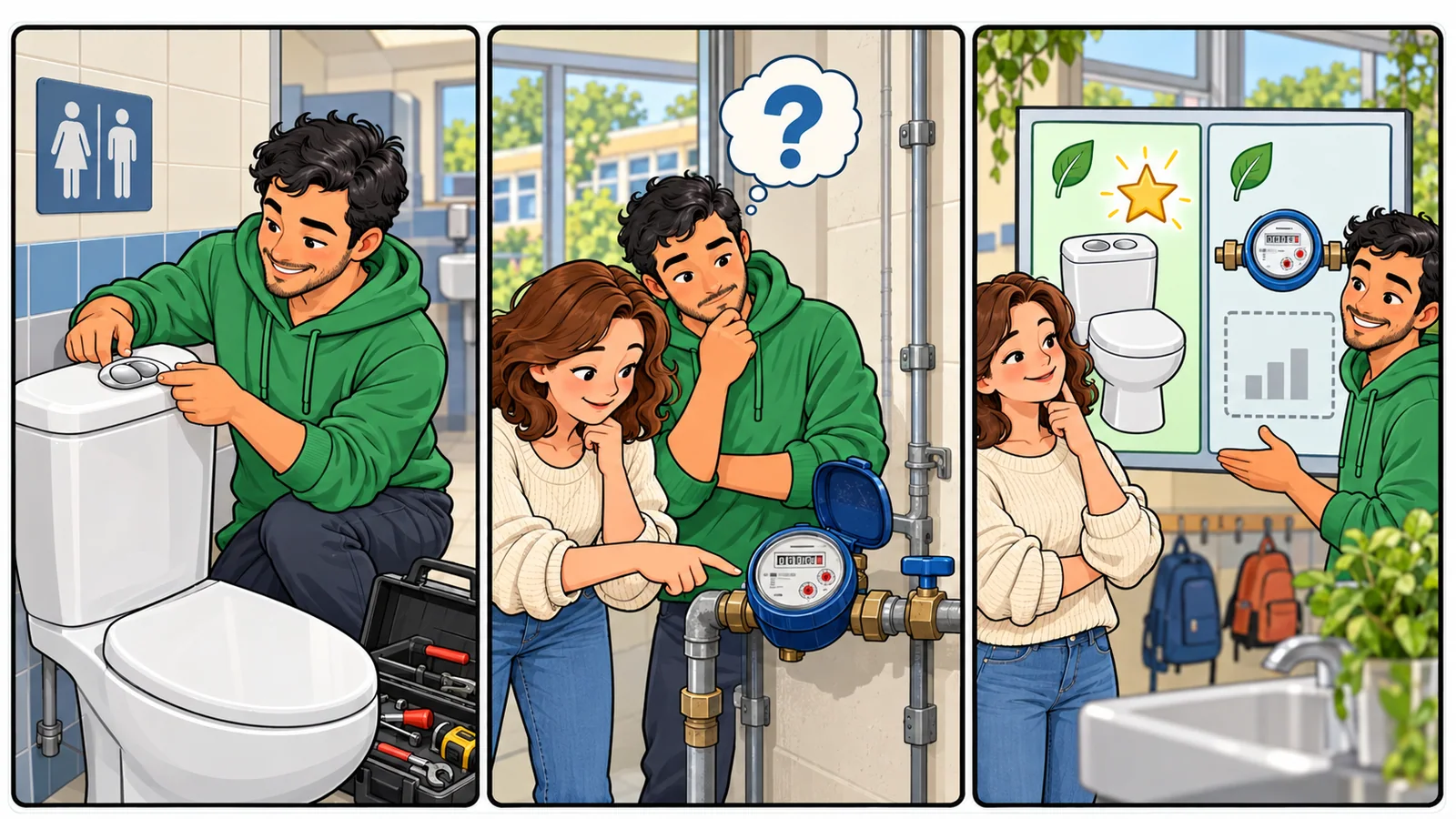
If we know that a dual-flush toilet exists, we recognize that installation. Without additional data, we do not invent the number of litres saved.
A network that multiplies
19Recognize those who make change possibleFinancing, designing, teaching and inspiring can help generate positive impact.Partly applied
Relevant relationships and the reach of improvements can recognise these contributions. The algorithm does not assign an exact causal share of the outcome to each participant.
A grant, an architectural project or an educational action can contribute to improvements made by other people. Its reach must be distinguished from a mere expectation.

20Extend recognition to the networkPositive contributions can benefit profiles with relevant relationships.Partly applied
The network transmits limited influence according to eligible relationships and their trust level. The actual intensity and duration of each relationship are not weighted automatically.
The school, its students and its collaborators are part of a network. The nature, intensity and duration of the relationship help determine proportionate recognition.

21Share without taking awayA keeps its points when its contribution helps B receive recognition.Applied today
Recognition received from the network does not subtract points from the source profile. It remains subject to the limits and rules of each scoring component.
The school keeps its recognition, and the organization that helped finance the improvement may receive its own. Points are not transferred like an account balance.

22Limit indirect recognitionRecognition diminishes at each connection and cannot grow without limit through loops.Applied today
Network influence decreases and has limits on traversal and points. The calculation avoids counting profiles again within a path; disputed relationships transmit no influence.
The influence reaching a third profile should be smaller. Creating circular links must not become an unlimited source of points.

23Count the physical result only onceSeveral people can receive recognition for the same 100 tonnes avoided; the total remains 100.Future development
The model groups the same work within a profile, but does not maintain a global record of physical outcomes shared across profiles. Points from different profiles cannot be added as tonnes avoided.
A school installs a solution, an organization finances it and a team carries it out. All can receive recognition, but they share a single physical result in this example.

Transparency and evolution
24Explain where the points come fromPeople should be able to distinguish the interpretation of an action, the rules that convert it into points and the information supporting it.Applied today
Details show the applied reach level and, where relevant, an assessment awaiting confirmation or grouping of the same work. They also show versions and the effect of removing an item and recalculating. Those individual effects cannot be added together.
The breakdown must distinguish a participant's own actions, results, recognition linked to the network and the evidence supporting the information.

25Keep the current score relevantBenchmarks evolve and contributions age; current recognition can change.Future development
There is no automatic depreciation due to age or improvements by other profiles. Scores can change when data, reach assessments or the model version are updated.
If other participants improve, an action may no longer stand out as much. This can reduce current recognition without imposing penalty points.

26Preserve the historyWe preserve past scores together with the context of their calculation.Partly applied
The history preserves snapshots with the version that calculated them and marks model changes. There is no streak counter that adds or removes points.
If the model changes, an earlier snapshot keeps its score and version. A jump in the chart does not by itself mean the profile’s activity has changed.

27Make the next improvement easierWe help people find relevant and achievable ways to contribute more.Partly applied
Strategies and examples can be explored. Saving or linking a strategy adds no points and does not mean an improvement has been carried out; personalised recommendations remain in development.
A farm and a dental clinic need different proposals. Opportunities must fit each participant's activity and circumstances.

28Publish the rules and how they evolveInterpretation rules, calculations and their changes should be explainable and reviewable, including when AI is involved.Applied today
The methodology explains reach levels, human review, calculation rules and their limits. Assessments store a fingerprint of the interpreted text, and historical snapshots retain their version. Correcting an assessment or changing the model can change the score; clarifying this page does not change the algorithm.
When the rules or their weights change, people must be able to identify the version used and the reason for the change. This guide describes the intended philosophy; it does not certify full implementation.

Do you want to know what EkoPulse measures today and how it explains it?
See the current methodology