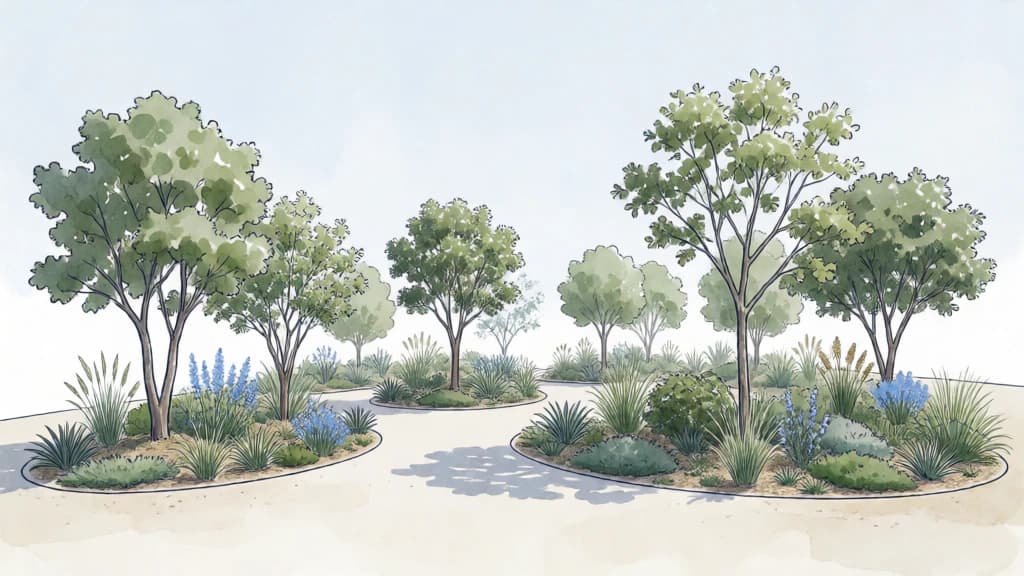
Xero-landscapery and low water demand gardening
Baseline strategy · No scoreDesign with adapted species and soils to reduce or avoid permanent irrigation without impoverishing the habitat.
How it works
Design with adapted species and soils to reduce or avoid permanent irrigation without impoverishing the habitat.
It applies the hierarchy of understanding, avoiding, reducing, reusing and treating, always maintaining the right quality for each use and health protection.
When does it make sense?
- With a water balance and significant uses
- When regulation and health risk allow the solution
- With clear inspection, treatment and maintenance officers
How to apply it
- 1
Defining what need resolves "woodland and gardening low water demand" and establishing a starting situation.
- 2
Compare alternatives and adapt design to climate, use, regulation, affected people and available resources.
- 3
Apply with clear responsibilities, check the actual result and correct unwanted effects.
Potential benefits
Reduced demand for drinking water
Less spills and runoff
Increased water resilience
Limitations and precautions
- The result depends on context, design, execution and how it is used and maintained.
- Saving water never justifies compromising hygiene or quality.
- Alternative systems need signage, secure networks, maintenance and risk control.
Keep Exploring
Related strategies