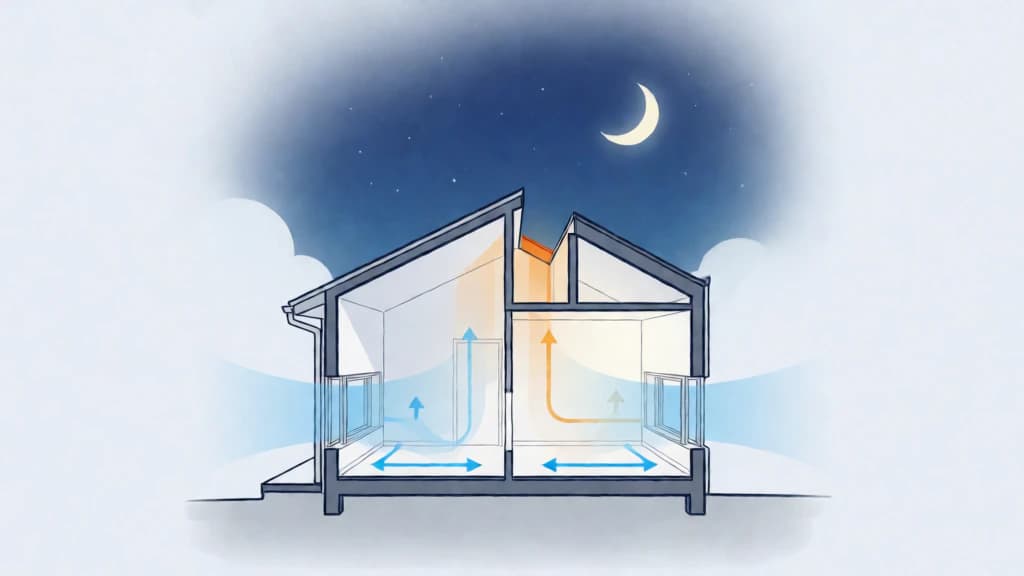
Natural cross-ventilation
Baseline strategy · No scoreIt favors air flow between openings located on different sides to renew the air and improve comfort without always relying on mechanical air conditioning.
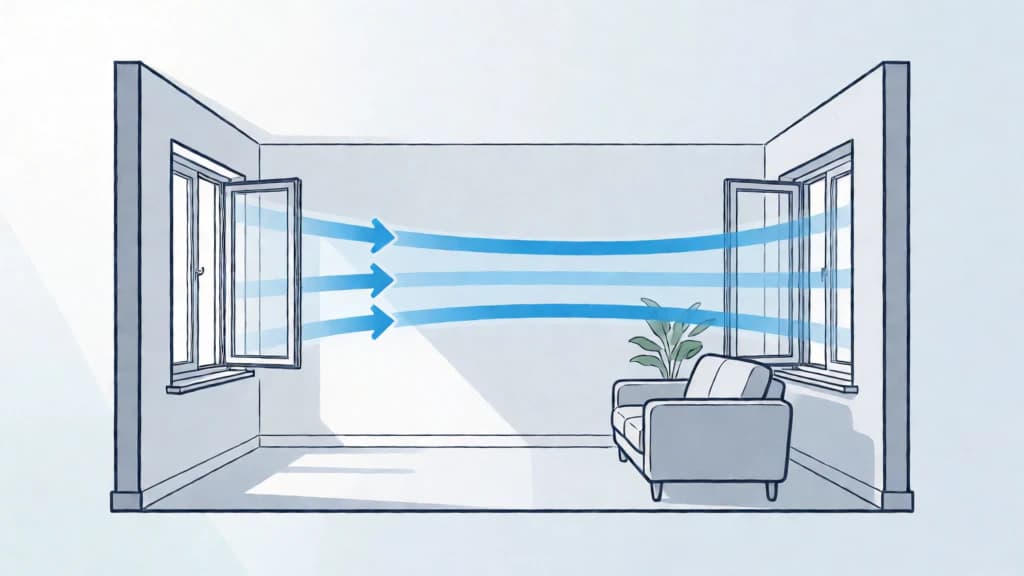
How it works
The air enters through an opening and exits through another located in a different façade or area. The pressure difference caused by the wind and, in some cases, the temperature difference helps to move it.
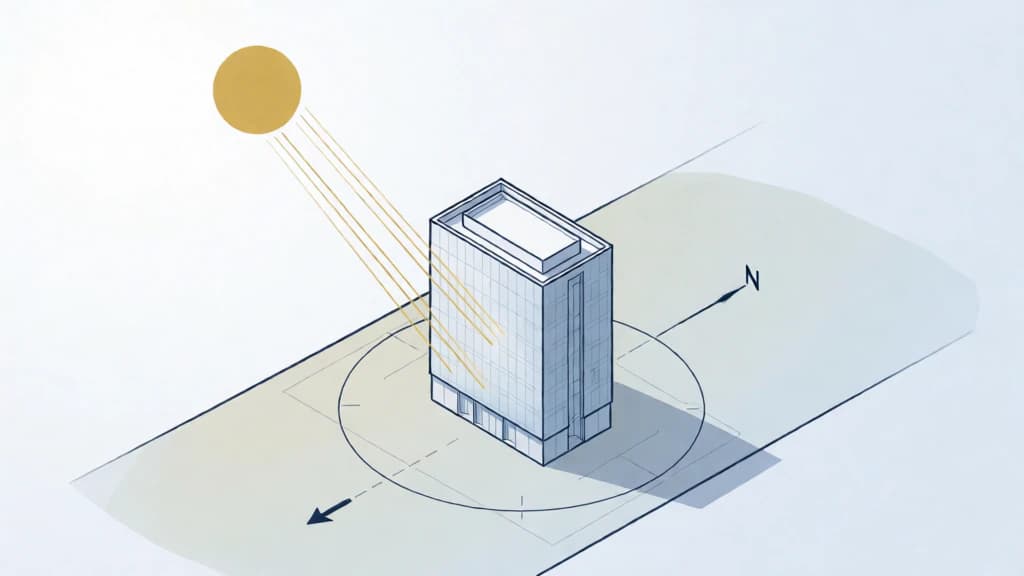
Its effectiveness depends on the orientation, size and position of the openings, whether there is an interior air flow and external conditions.
When does it make sense?
- Outdoor air with appropriate temperature and quality
- Openings on different sides or areas of different pressure
- Internal air route without major obstacles
How to apply it
- 1
Identify the usual wind direction and entrance and exit facades.
- 2
Check that doors, grids or interior spaces allow for continuous travel.
- 3
Open in a controlled way and close when the exterior worsens comfort or air quality.
Potential benefits
Air renewal
Lower fan demand
Improvement of comfort
Limitations and precautions
- It does not replace the ventilation flows required by regulations when they require a mechanical system.
- It can be inadequate with noise, pollution, pollen, humidity or unfavorable external temperatures.
- Security, rain and control of currents must be resolved in each building.
Keep Exploring
Related strategies