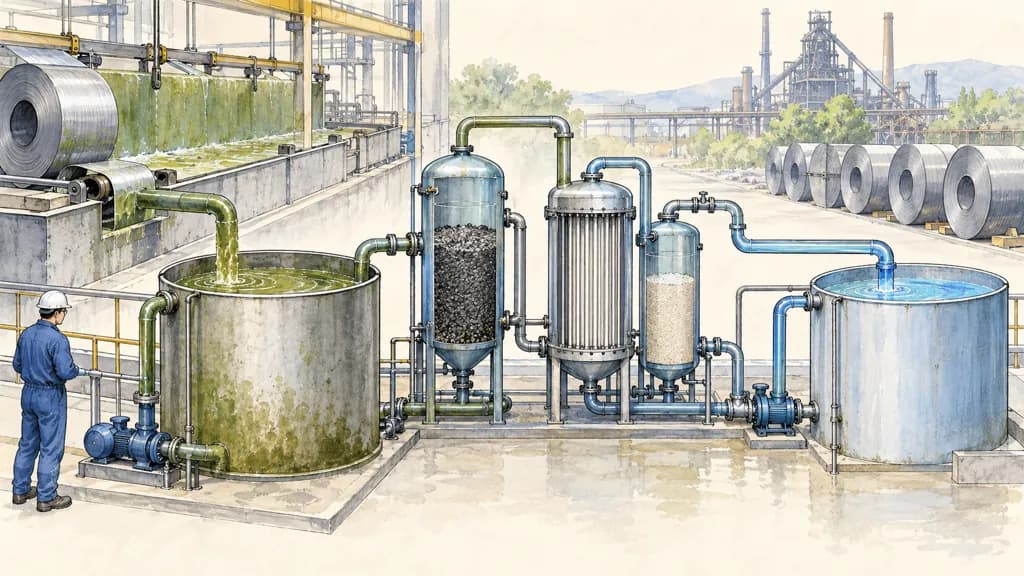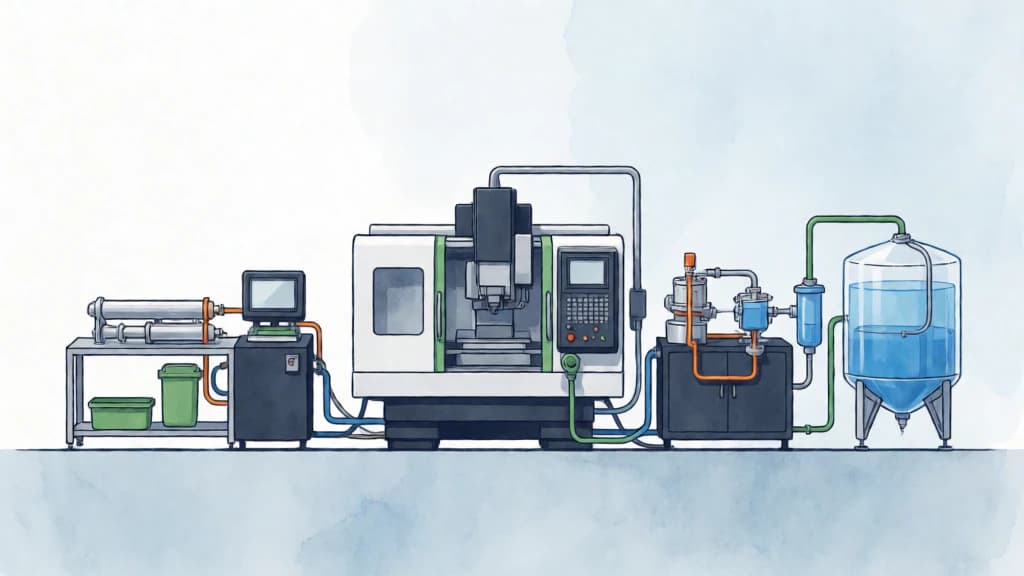
Treatment of steel effluents
Baseline strategy · No scoreEliminates oils, solids and metals from industrial waters before reuse or pouring.
Subject: Steel and industryContext: Steel · Industry · Manufacture of steelCost: mediumEffort: mediumLevel: recommendedStage: planning and operationMaturity: established
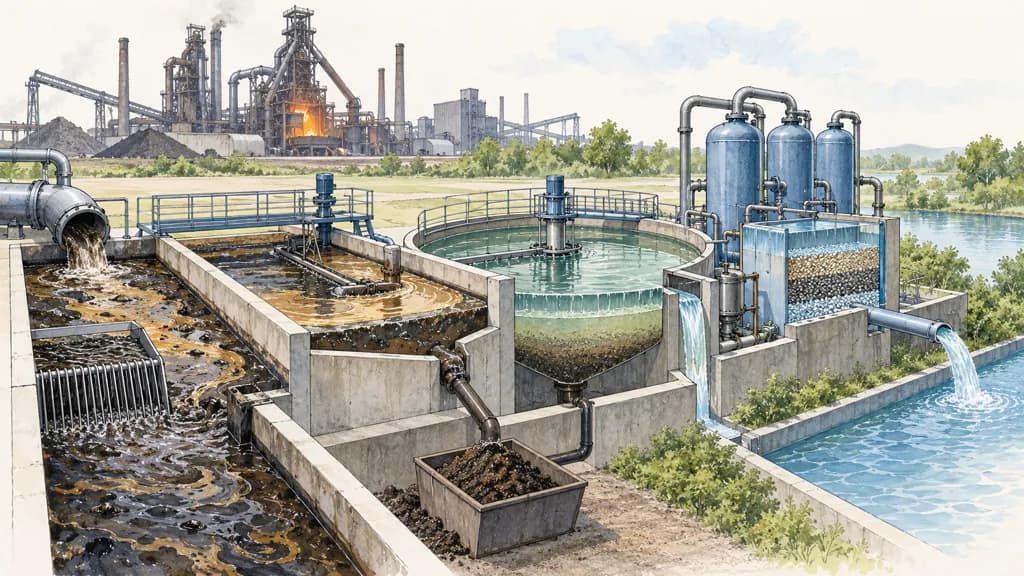
How it works
Eliminates oils, solids and metals from industrial waters before reuse or pouring.
Steel improvement combines lower emission routes, material performance, energy efficiency and water, air and waste control.
When does it make sense?
- The production route and quality required are known
- Energy, material and emissions balance can be measured
- Product safety and durability are maintained
How to apply it
- 1
Delimit the measurement and measure the starting position.
- 2
Apply the measure with competent personnel and check for site-specific risks.
- 3
Follow results, maintain the solution and correct unwanted effects.
Potential benefits
Lower resource intensity
Less emissions or waste
Increased use of steel
Limitations and precautions
- The benefit must be verified under the actual conditions of application.
- An improvement per tonne can coexist with more total emissions.
- The routes depend on scrap, electricity, mineral and infrastructure available.
Keep Exploring
Related strategies