Refrigeration with natural water sources
Baseline strategy · No scoreExchange heat with deep, marine, lake or underground water without consuming it when permits and ecosystems allow.
Subject: Thermal systems and ventilationContext: Neighbourhoods · Industry · CostsCost: highEffort: highLevel: ambitiousStage: planningMaturity: context-dependent
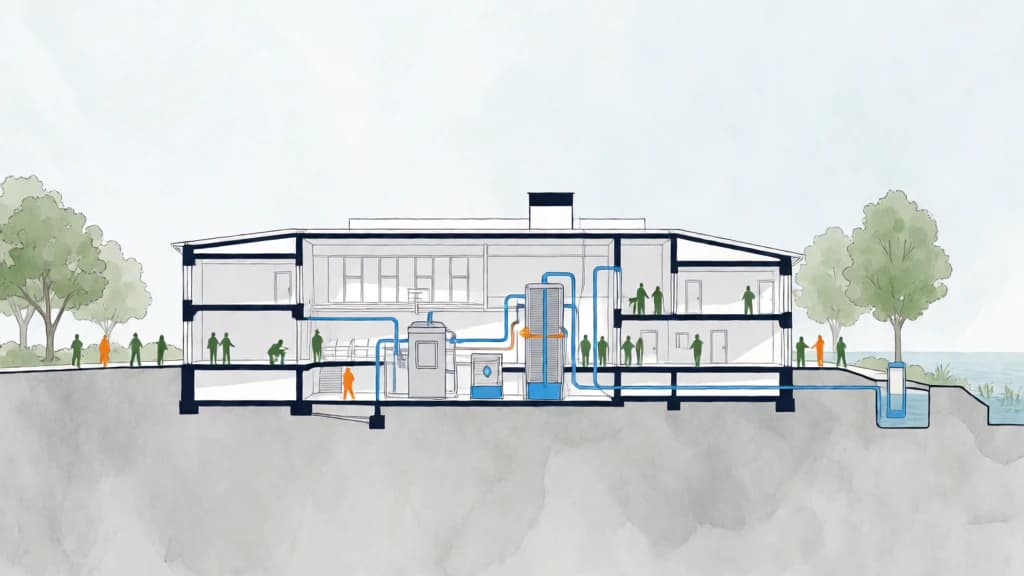
How it works
Exchange heat with deep, marine, lake or underground water without consuming it when permits and ecosystems allow.
It meets thermal and indoor air needs after reducing demand, through sized, controlled, maintainable systems compatible with decarbonization.
When does it make sense?
- After reducing loads and defining health and comfort requirements
- When partial load and year-round performance can be compared
- With access to commissioning, maintenance and monitoring
How to apply it
- 1
Defining what need resolves "cooling with natural water sources" and establishing a starting situation.
- 2
Compare alternatives and adapt design to climate, use, regulation, affected people and available resources.
- 3
Apply with clear responsibilities, check the actual result and correct unwanted effects.
Potential benefits
Thermal comfort
Healthier indoor air
Lower consumption and power
Limitations and precautions
- The result depends on context, design, execution and how it is used and maintained.
- Nominal efficiency does not guarantee the performance of the entire system.
- Dimensions, refrigerants, noise, hygiene, controls and maintenance should be evaluated.
Keep Exploring
Related strategies