Pneumatic waste collection
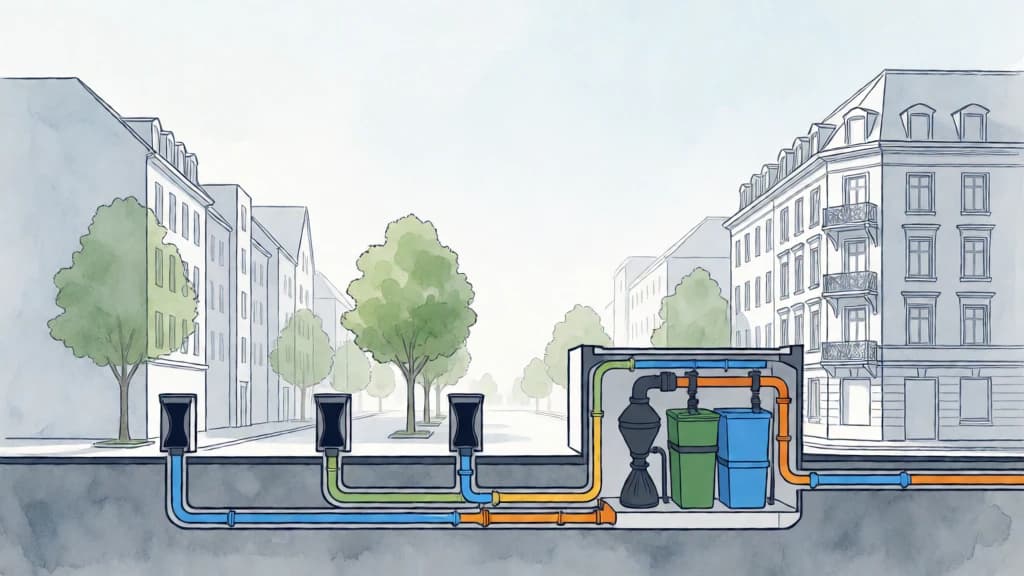
Baseline strategy · No scoreIt transports pipe fractions to centralized points in development with adequate density and operation.
Subject: WasteContext: Cities · Neighbourhoods · Large enclosuresCost: highEffort: highLevel: ambitiousStage: planningMaturity: context-dependent
How it works
It transports pipe fractions to centralized points in development with adequate density and operation.
It follows a hierarchy: prevent, keep in use, reuse, repair, recycle and safely treat only what could not be avoided.
When does it make sense?
- Since the purchase and design, not only at the end of the process
- With known quantities, compositions and destinations
- Where traceable responsibilities and managers exist
How to apply it
- 1
Defining what need resolves "pneumatic waste collection" and establishing a starting situation.
- 2
Compare alternatives and adapt design to climate, use, regulation, affected people and available resources.
- 3
Apply with clear responsibilities, check the actual result and correct unwanted effects.
Potential benefits
Reduced use of resources
Less final waste
Increased value recovery
Limitations and precautions
- The result depends on context, design, execution and how it is used and maintained.
- Valuation should not conceal opportunities for prevention or reuse.
- Separate materials without a real and traceable destination does not guarantee their recovery.
Keep Exploring
Related strategies