Prevention of impacts during the work
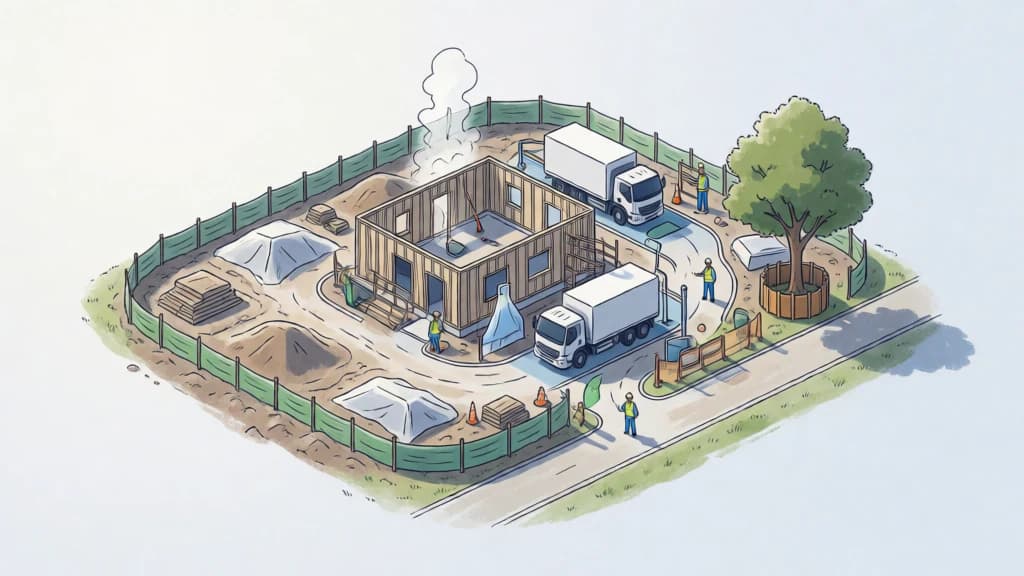
Baseline strategy · No scoreIt controls dust, noise, erosion, runoff, discharges and risks for people, fauna and environment during construction.
How it works
It controls dust, noise, erosion, runoff, discharges and risks for people, fauna and environment during construction.
Site decisions order impacts and opportunities before defining the building or infrastructure. Its effect is often prolonged for decades.
When does it make sense?
- Before acquiring, requalifying or transforming a plot
- When locations and configurations can still be compared
- With up-to-date information on climate, mobility, soil, water and social values
How to apply it
- 1
Defining what need resolves "impact prevention during the work" and establishing a starting situation.
- 2
Compare alternatives and adapt design to climate, use, regulation, affected people and available resources.
- 3
Apply with clear responsibilities, check the actual result and correct unwanted effects.
Potential benefits
Lower territorial pressure
Increased resilience
Better connection to the environment
Limitations and precautions
- The result depends on context, design, execution and how it is used and maintained.
- A single quality of the site does not compensate for serious impacts in other areas.
- Future conditions and the people concerned should be part of the decision.
Keep Exploring
Related strategies