Local materials and responsible chains
Baseline strategy · No scoreIt values proximity along with provenance, performance, durability and transport, avoiding assuming that local always means less impact.
How it works
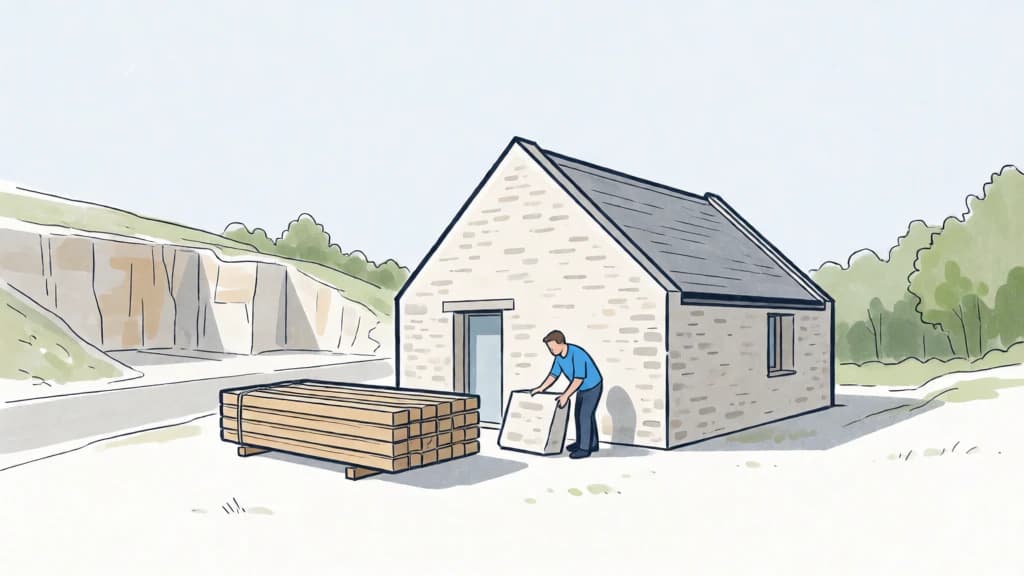
It values proximity along with provenance, performance, durability and transport, avoiding assuming that local always means less impact.
It considers materials and components throughout extraction, manufacture, transport, use, maintenance and recovery to conserve value and reduce impacts.
When does it make sense?
- Before you specify or purchase materials and products
- Where functionally comparable alternatives exist
- With life cycle data and a realistic maintenance and end-of-use plan
How to apply it
- 1
Define what needs resolves "local materials and responsible chains" and establish a starting situation.
- 2
Compare alternatives and adapt design to climate, use, regulation, affected people and available resources.
- 3
Apply with clear responsibilities, check the actual result and correct unwanted effects.
Potential benefits
Lower carbon life cycle
Less extraction and toxicity
More retained value
Limitations and precautions
- The result depends on context, design, execution and how it is used and maintained.
- An isolated label does not replace the comparison of the entire system.
- Durability, security, quantity used and end-of-life scenario can change the result.
Keep Exploring
Related strategies