
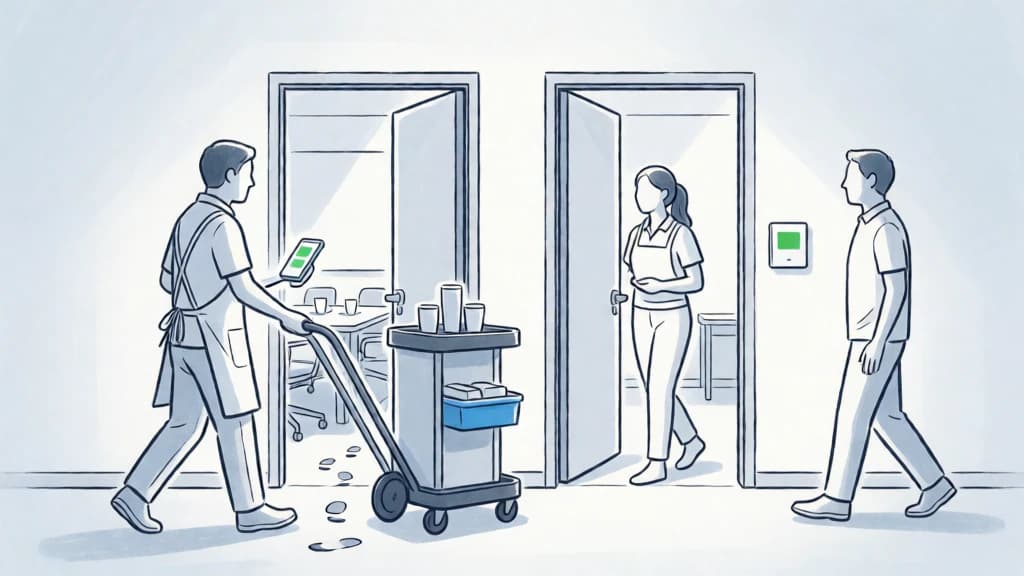
Cleaning according to need and not by routine
Baseline strategy · No scoreSchedule cleaning from the use and actual state of each space instead of repeating a fixed frequency.
How it works
Schedule cleaning from the use and actual state of each space instead of repeating a fixed frequency.
It converts objectives into verifiable decisions through simulation, measurement, review, learning and clear responsibilities throughout the life cycle.
When does it make sense?
- Before irreversible decisions and after putting the system into use
- When there is a specific question the data can answer
- With defined data quality, privacy, responsibility and subsequent actions
How to apply it
- 1
Defining what need resolves "cleansing according to necessity and not by routine" and establishing a starting situation.
- 2
Compare alternatives and adapt design to climate, use, regulation, affected people and available resources.
- 3
Apply with clear responsibilities, check the actual result and correct unwanted effects.
Potential benefits
More informed decisions
Early detection of failures
Learning and continuous improvement
Limitations and precautions
- In sanitary, food or high-flow spaces the minimum frequency may be regulated.
- Measuring without ability to act adds complexity without improving results.
- Models and certifications depend on assumptions, scope, data and verification.
Keep Exploring
Related strategies