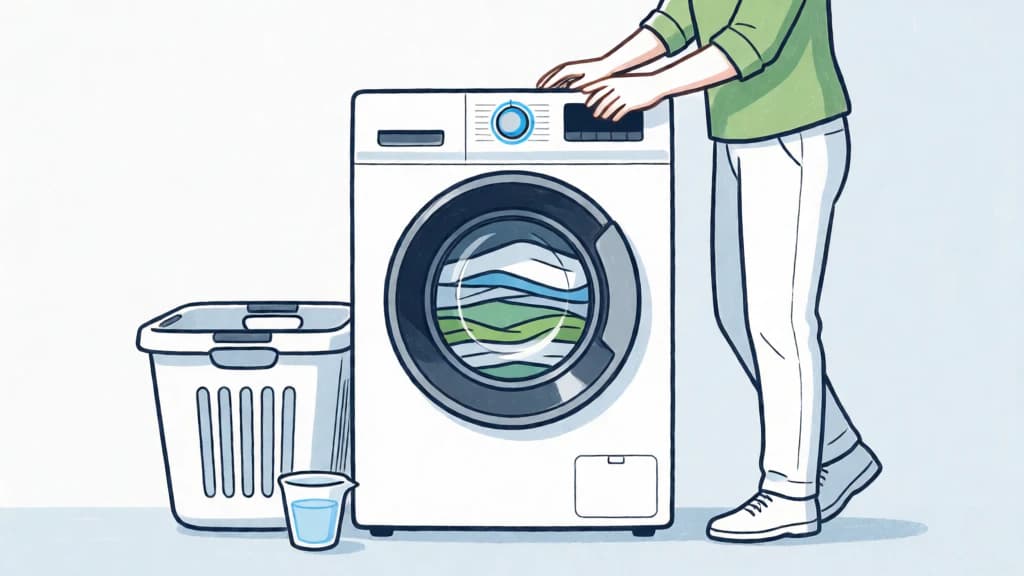
Washing at full load and low temperature
Baseline strategy · No scoreIt takes advantage of the complete capacity of the equipment and the lowest temperature that gives good results to reduce energy, water and detergent.
How it works
It takes advantage of the complete capacity of the equipment and the lowest temperature that gives good results to reduce energy, water and detergent.
It reduces emissions and pressure on the network by combining efficient demand, clean generation, storage and flexible operation at the right scale.
When does it make sense?
- After prioritizing demand reduction and efficiency
- With resource, demand and network connection characterized
- When safety, maintenance, provenance and end of life are resolved
How to apply it
- 1
Define what needs resolves "full-load and low-temperature washing" and establish a starting situation.
- 2
Compare alternatives and adapt design to climate, use, regulation, affected people and available resources.
- 3
Apply with clear responsibilities, check the actual result and correct unwanted effects.
Potential benefits
Lower operational emissions
Greater renewable integration
More resilience and flexibility
Limitations and precautions
- Certain sanitary or very dirty loads require high temperature and do not support this adjustment.
- Technology is not sustainable by name: resource, fuel, scale and life cycle matter.
- Some options are transitioning or only make sense in applications that are difficult to electrify.
Keep Exploring
Related strategies