Taps with sensors and timers
Baseline strategy · No scoreControls when and for how long water flows in frequently used washbasins, always with properly adjusted flow rate, timing, hygiene and maintenance.
How it works
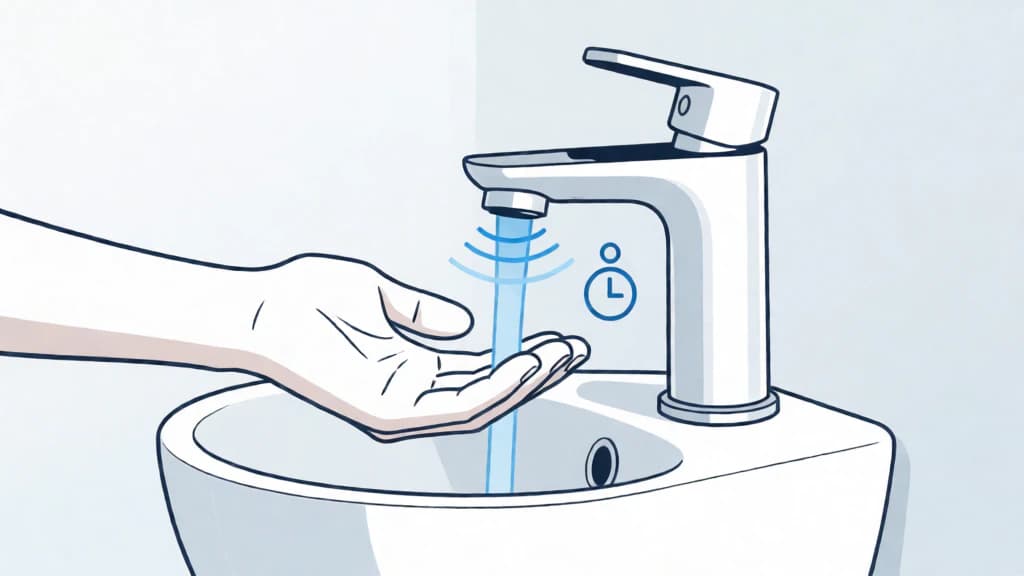
A presence sensor or timed pushbutton opens the water passage during a defined interval. Potential savings come from avoiding open taps longer than necessary.
The actual result depends on the flow rate, cycle time, sensor sensitivity, pressure and usage behavior; automating alone does not guarantee a reduction.
When does it make sense?
- Washbasins for frequent or public use
- Regular risk of open taps or excessive cycles
- Maintenance capable of checking sensors, batteries, aerators and temperature
How to apply it
- 1
Measure current flow rate, duration and usage pattern before selecting the equipment.
- 2
Choose and adjust flow rate and timing to use, accessibility, hygiene and applicable regulations.
- 3
Check consumption and operation after installation; correct false activations, long cycles or inadequate temperatures.
Potential benefits
Less unnecessary flow time
More consistent use
Less contact with controls
Limitations and precautions
- A poorly programmed sensor can consume equal or more water than an efficient manual tap.
- The components require regular cleaning, feeding and maintenance.
- The design and operation of the water system must also manage temperature, stagnation and hygiene, including the risk of Legionella.
Keep Exploring
Related strategies