Avoid flood-risk areas
Baseline strategy · No scoreIt places vulnerable uses outside exposed areas and combines management, adaptation and nature-based solutions.
Subject: Plot and territoryContext: Urban planning · Buildings · InfrastructureCost: mediumEffort: highLevel: basicStage: planningMaturity: established
How it works
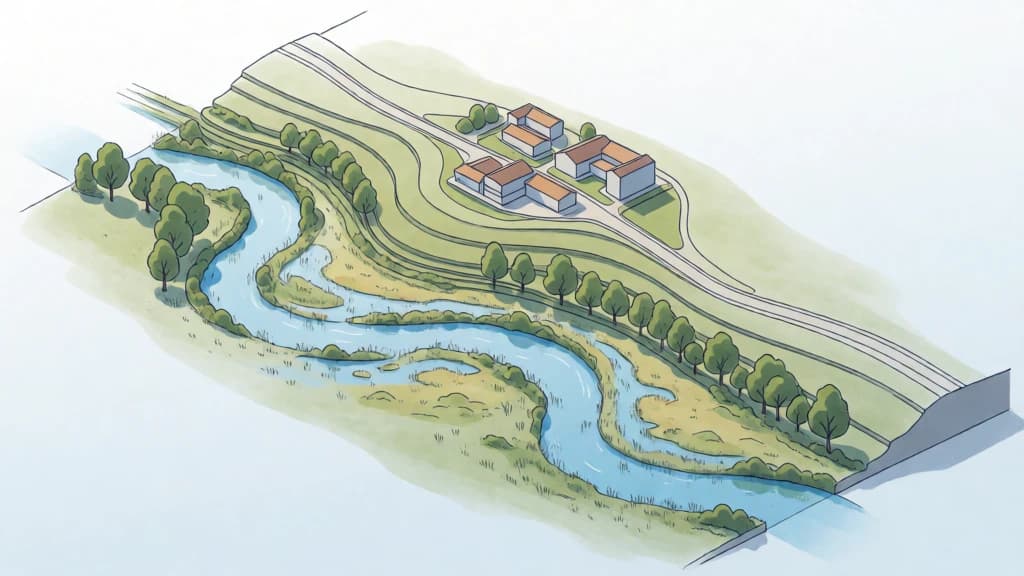
It places vulnerable uses outside exposed areas and combines management, adaptation and nature-based solutions.
Site decisions order impacts and opportunities before defining the building or infrastructure. Its effect is often prolonged for decades.
When does it make sense?
- Before acquiring, requalifying or transforming a plot
- When locations and configurations can still be compared
- With up-to-date information on climate, mobility, soil, water and social values
How to apply it
- 1
Defining what needs resolves "avoiding flood-risk areas" and establishing a starting position.
- 2
Compare alternatives and adapt design to climate, use, regulation, affected people and available resources.
- 3
Apply with clear responsibilities, check the actual result and correct unwanted effects.
Potential benefits
Lower territorial pressure
Increased resilience
Better connection to the environment
Limitations and precautions
- Future risk should be assessed using up-to-date climate scenarios, not just historical records.
- A single quality of the site does not compensate for serious impacts in other areas.
- Future conditions and the people concerned should be part of the decision.
Keep Exploring
Related strategies