Passive night chills
Baseline strategy · No scoreTake advantage of the cooler outdoor air at night to evacuate the accumulated heat in a building and reduce cooling demand the next day.
How it works
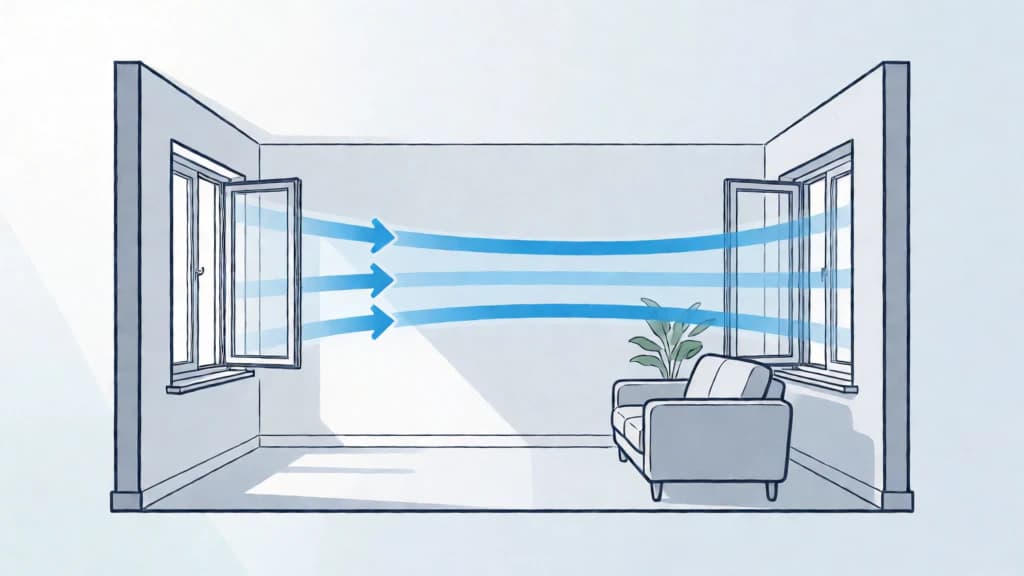
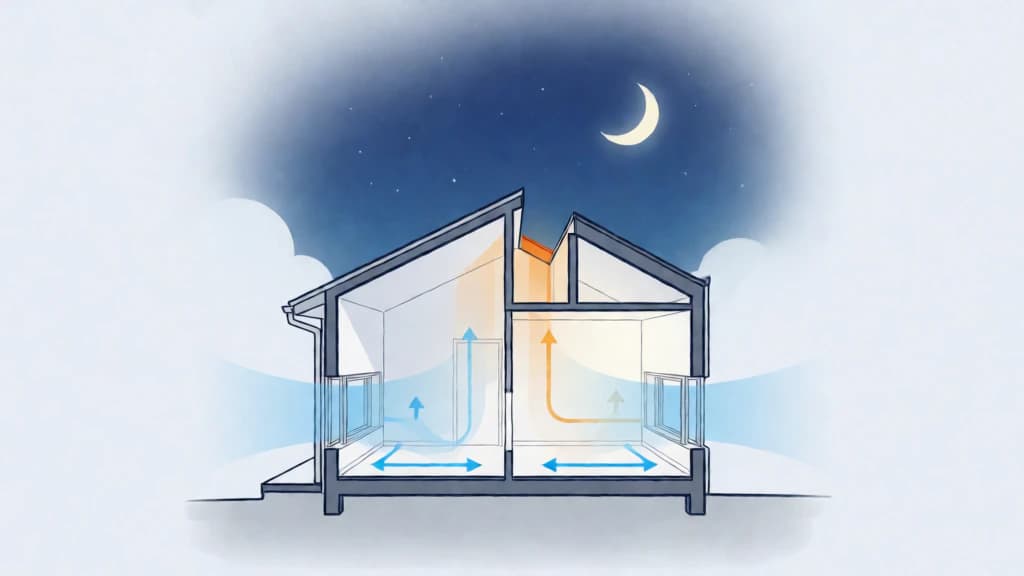
During the night, when the outside temperature drops below the interior, holes or floodgates are strategically opened to introduce fresher air.
The air passes through the spaces and helps extract heat stored in walls, forgings and other elements with thermal mass. At dawn the holes are closed to preserve the freshness during part of the day.
When does it make sense?
- Nights noticeably cooler than the interior
- Possibility to vent safely
- Thermal mass available and exposed
- A clear system of opening and closing
How to apply it
- 1
Assess the local climate and the typical temperature difference between day and night.
- 2
Define air inputs and outputs, expected flow rate and safe manual or automatic control.
- 3
Monitor temperature, humidity and air quality; adjust times according to actual behavior.
Potential benefits
Lower cooling demand
Best summer comfort
Reduced use of mechanical equipment
Limitations and precautions
- It loses effectiveness when nights are warm or very wet.
- It can be limited by external noise, pollution, pollen, rain or intrusion risks.
- Automation should include temperature, rain, wind and safety limits; it is not appropriate to keep openings indiscriminately.
Keep Exploring
Related strategies