Adaptive thermal comfort
Baseline strategy · No scoreExpand the range of comfort through clothing, air movement, personal control and adapted expectations without imposing uniform conditions.
How it works
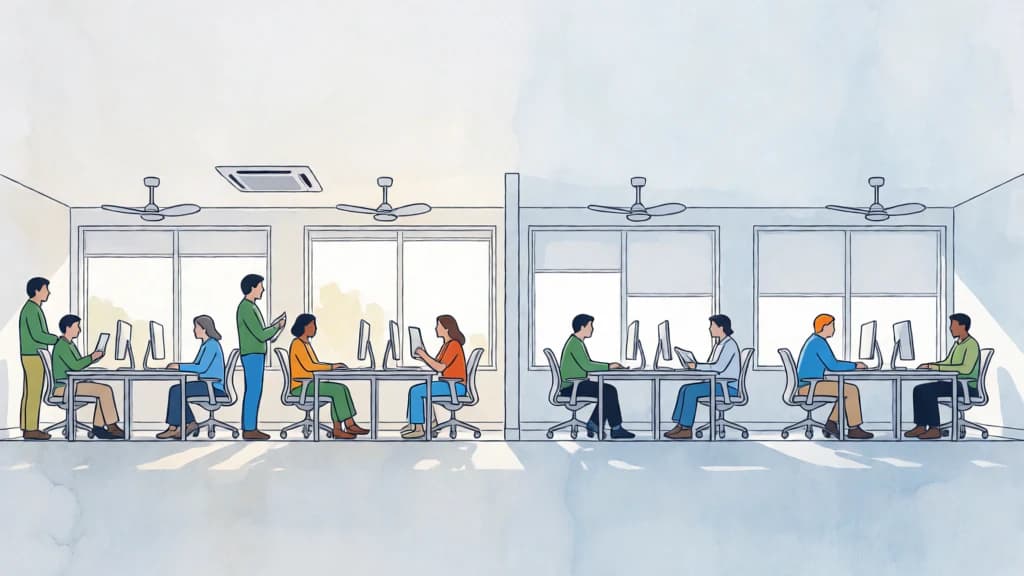
Expand the range of comfort through clothing, air movement, personal control and adapted expectations without imposing uniform conditions.
It places people, communities and other living beings in the center, caring for health, safety, dignity, culture, accessibility and quality of experience.
When does it make sense?
- Since the definition of objectives and with participation of those who will be affected
- Where benefits, burdens and possible exclusions can be identified
- With qualitative and quantitative indicators provided and respectful of privacy
How to apply it
- 1
Define what needs resolves "adaptative thermal comfort" and establish a starting situation.
- 2
Compare alternatives and adapt design to climate, use, regulation, affected people and available resources.
- 3
Apply with clear responsibilities, check the actual result and correct unwanted effects.
Potential benefits
More health and welfare
Increased inclusion and membership
Lasting social and economic value
Limitations and precautions
- The result depends on context, design, execution and how it is used and maintained.
- Well-being cannot be reduced to a single metric or imposed without listening to people.
- Partnerships with productivity or economic value should be measured without promising automatic causality.
Keep Exploring
Related strategies