Design for biological and technical cycles
Baseline strategy · No scoreMaintains materials compatible with safe biological return cycles or high-quality technical recovery.
Subject: Materials and circularityContext: Outputs · Construction · IndustryCost: mediumEffort: highLevel: ambitiousStage: designMaturity: context-dependent
How it works
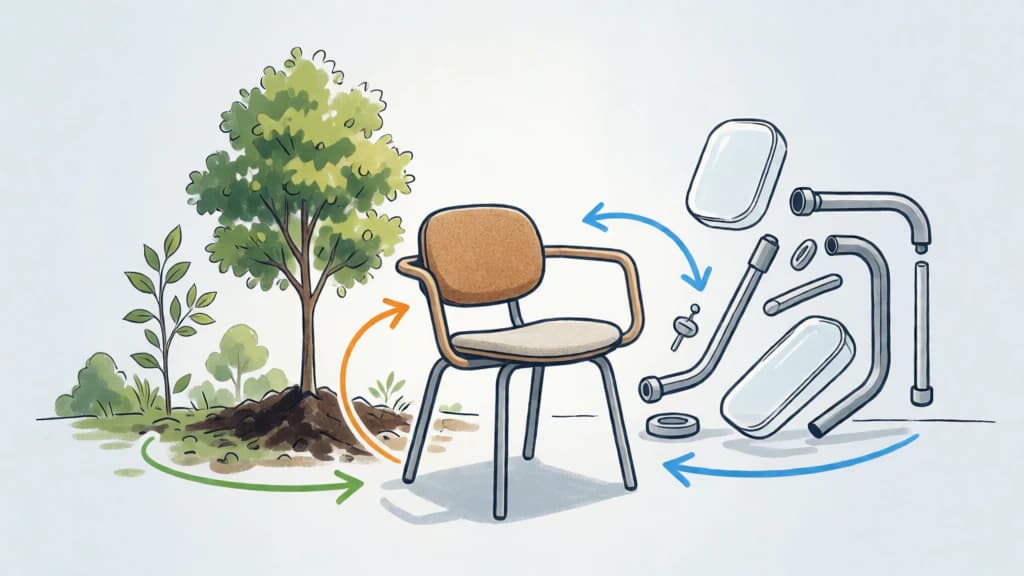
Maintains materials compatible with safe biological return cycles or high-quality technical recovery.
It considers materials and components throughout extraction, manufacture, transport, use, maintenance and recovery to conserve value and reduce impacts.
When does it make sense?
- Before you specify or purchase materials and products
- Where functionally comparable alternatives exist
- With life cycle data and a realistic maintenance and end-of-use plan
How to apply it
- 1
Defining what need resolves "design for biological and technical cycles" and establishing a starting situation.
- 2
Compare alternatives and adapt design to climate, use, regulation, affected people and available resources.
- 3
Apply with clear responsibilities, check the actual result and correct unwanted effects.
Potential benefits
Lower carbon life cycle
Less extraction and toxicity
More retained value
Limitations and precautions
- The result depends on context, design, execution and how it is used and maintained.
- An isolated label does not replace the comparison of the entire system.
- Durability, security, quantity used and end-of-life scenario can change the result.
Keep Exploring
Related strategies