Low emissions textile industrial heat
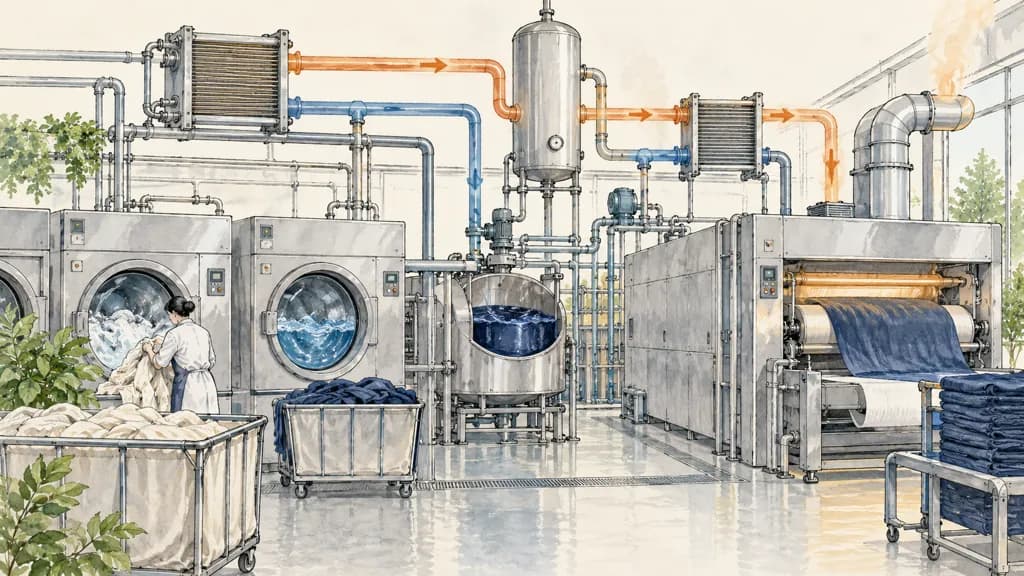
Baseline strategy · No scoreElectrifies and recovers heat from washing, dyeing and drying wherever technically appropriate.
Subject: Fashion and textilesContext: Fashion · Textiles · ClothingCost: highEffort: highLevel: ambitiousStage: planning and operationMaturity: context-dependent
How it works
Electrifies and recovers heat from washing, dyeing and drying wherever technically appropriate.
The textile chain can reduce impacts by producing fewer surpluses, improving manufacturing and employment and extending the useful life of clothing.
When does it make sense?
- The product and its supply chain are known
- Practice preserves quality, use and safety
- Total impacts and working conditions measured
How to apply it
- 1
Delimit the measurement and measure the starting position.
- 2
Apply the measure with competent personnel and check for site-specific risks.
- 3
Follow results, maintain the solution and correct unwanted effects.
Potential benefits
Less textile waste
Longer life of garments
More responsible supply chain
Limitations and precautions
- The benefit must be verified under the actual conditions of application.
- A recycled fibre or label alone does not guarantee a sustainable product.
- Transport, washing and increased consumption can cancel out part of the profit.
Keep Exploring
Related strategies