Priority parking for shared vehicles
Baseline strategy · No scoreBook well-located spaces for vehicles with multiple people, making it more comfortable to share trips and reduce the occupancy of space per person.
How it works
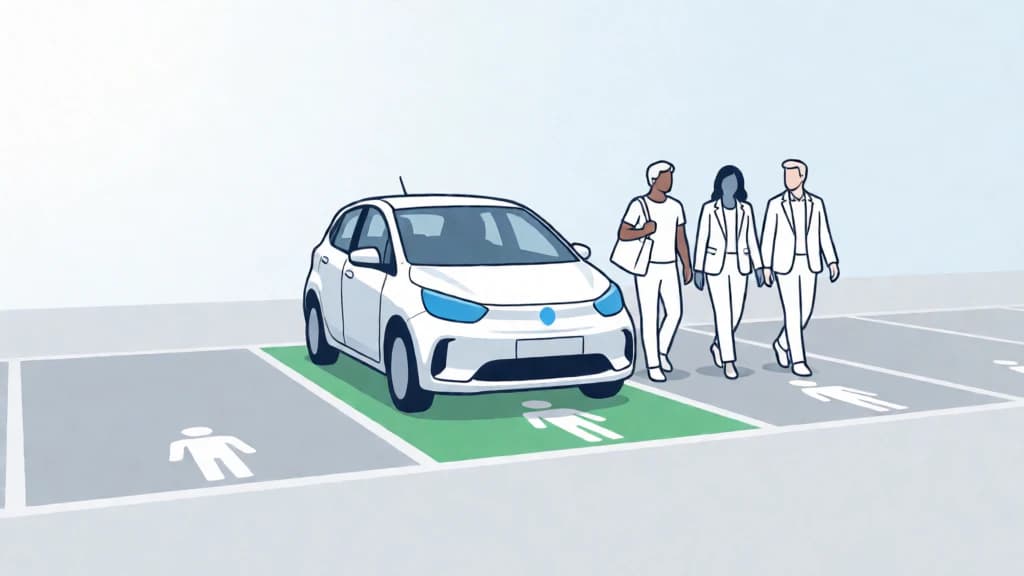
The reserved places give a visible and daily advantage to those who share vehicles. The measure is often part of a mobility plan with communication, matching and monitoring.
The design should define what is considered a shared vehicle, how it is credited and how priority is prevented from shifting more sustainable modes such as walking, pedaling or using public transport.
When does it make sense?
- Centres with own parking and recurring trips
- Persons with compatible origins or schedules
- Ability to communicate and check the use of places
How to apply it
- 1
Analyze travel patterns and consult users.
- 2
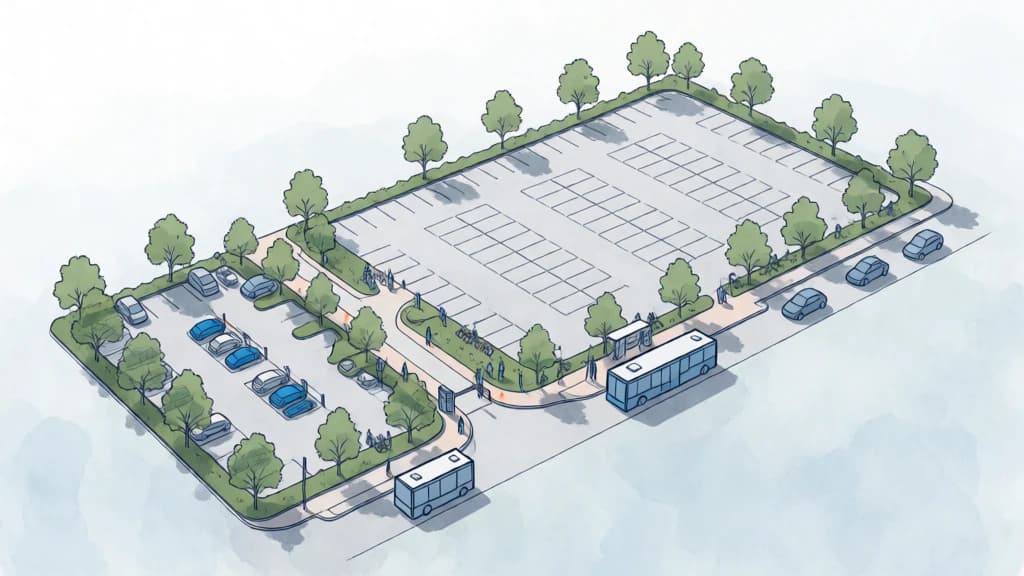
Book few places visible, signposted and nearby, with clear and reviewable rules.
- 3
Facilitate pairing and measure occupation, participation and potential unintended effects.
Potential benefits
Less vehicles per traveller
More efficient use of parking
Visible incentive for shared travel
Limitations and precautions
- It alone can have little effect if there are no compatible travel partners or coordination alternatives.
- It should prevent abuse without creating a disproportionate administrative burden.
- You should not encourage driving in front of walking, cycling or public transport.
Keep Exploring
Related strategies