Turn off lights when not in use
Baseline strategy · No scoreA simple habit that prevents unnecessary electrical consumption and associated emissions when a space is empty or has enough natural light.
How it works
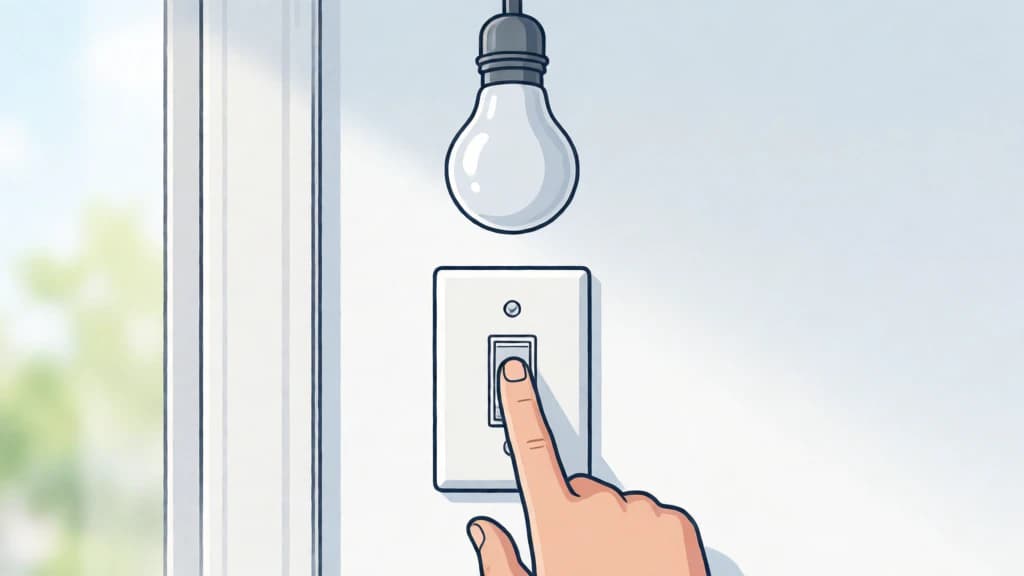
Switching off a luminaire eliminates its consumption during the time it does not provide utility. Savings depend on installed power, avoided hours and electrical source.
The measure can be supported by signage, closing officers, presence sensors or time controls, without losing the possibility of manual control.
When does it make sense?
- Empty spaces or with sufficient natural light
- Zones with clear schedules or intermittent use
- Circuits that allow to turn off independent areas
How to apply it
- 1
Identify areas that remain illuminated without need and estimate their schedules.
- 2
Agree on a simple shutdown pattern and assign responsibilities if applicable.
- 3
Check the result and automate only where it provides reliability and does not compromise safety.
Potential benefits
Lower power consumption
Lower internal thermal load
Culture of responsible use
Limitations and precautions
- It must never compromise safety, evacuation or minimum lighting levels.
- Misconfigured sensors can turn off the light with people present or turn it on unnecessarily.
- The measure does not replace the improvement of inefficient luminaires or a good lighting design.
Keep Exploring