Hot water near point of use
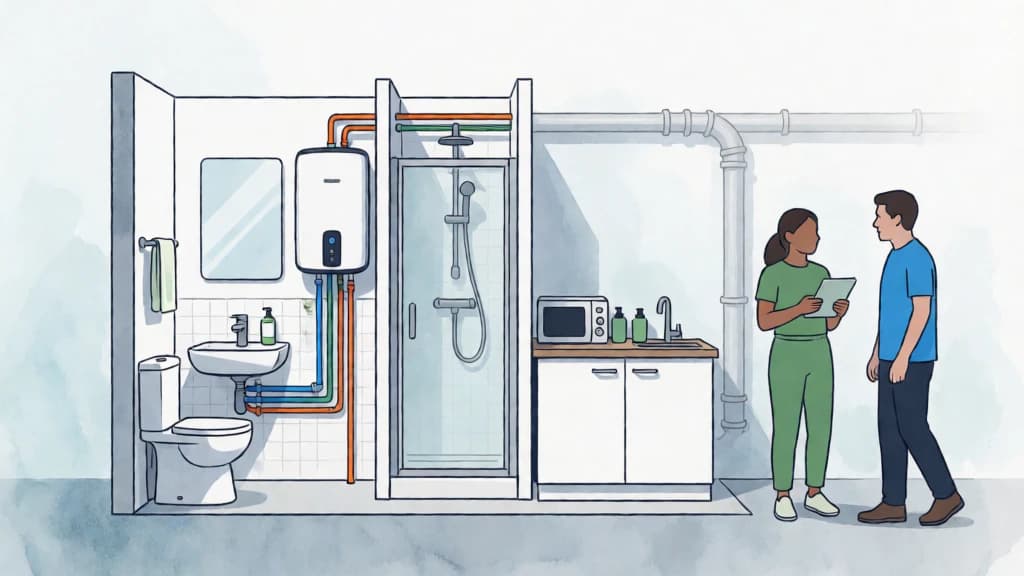
Baseline strategy · No scoreReduces waits and losses on long routes by means of a central, distributed or punctual solution well dimensioned.
Subject: Thermal systems and ventilationContext: Buildings · Housing · HotelsCost: mediumEffort: mediumLevel: recommendedStage: design or rehabilitationMaturity: context-dependent
How it works
Reduces waits and losses on long routes by means of a central, distributed or punctual solution well dimensioned.
It meets thermal and indoor air needs after reducing demand, through sized, controlled, maintainable systems compatible with decarbonization.
When does it make sense?
- After reducing loads and defining health and comfort requirements
- When partial load and year-round performance can be compared
- With access to commissioning, maintenance and monitoring
How to apply it
- 1
Defining what need resolves "hot water near the point of use" and establishing a starting situation.
- 2
Compare alternatives and adapt design to climate, use, regulation, affected people and available resources.
- 3
Apply with clear responsibilities, check the actual result and correct unwanted effects.
Potential benefits
Thermal comfort
Healthier indoor air
Lower consumption and power
Limitations and precautions
- The result depends on context, design, execution and how it is used and maintained.
- Nominal efficiency does not guarantee the performance of the entire system.
- Dimensions, refrigerants, noise, hygiene, controls and maintenance should be evaluated.
Keep Exploring
Related strategies